Vishishtadvaita Vedanta is one of the major schools of Indian philosophy. The word Vishishtadvaita means “qualified non-dualism”:
Vishishta -qualified, with attributes or qualities
Advaita -non-duality, oneness
It teaches that there is one ultimate reality (Brahman), but that reality includes diversity within it. The universe and individual souls are real and are connected to Brahman, rather than being completely separate or completely identical.
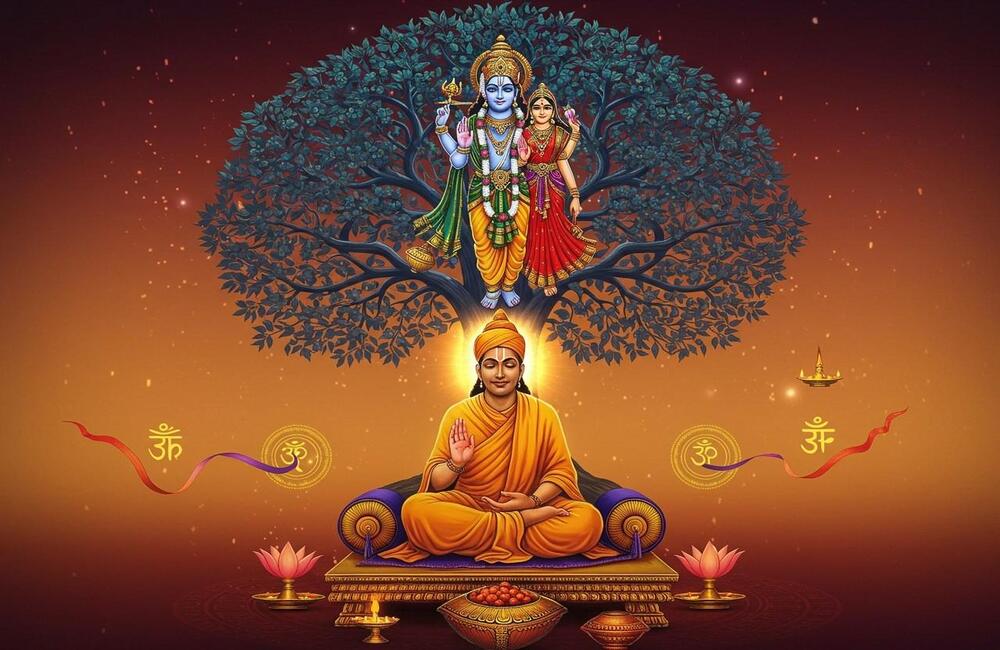
The philosophy was systematized by Ramanuja (c. 11th-12th century), who taught devotion to Vishnu (especially as Narayana) as a path to liberation.
Main ideas of Vishishtadvaita
- Brahman is the Supreme Reality
Vishishtadvaita says that the ultimate reality is a personal, conscious, and compassionate God (Brahman). God is not just an abstract principle but has qualities such as love, wisdom, and mercy.
- The soul (Atman) is real
Individual souls are eternal and have their own identity. They are not illusions. However, they are dependent on and connected to God.
- The world is real
Unlike some interpretations that see the world as an illusion, Vishishtadvaita teaches that the universe is real because it is the expression or body of Brahman.
A common analogy:
- The body belongs to the soul.
- The universe belongs to God.
- Individual souls and nature exist within God’s greater reality.
- Path to liberation (Moksha)
According to Vishishtadvaita, liberation comes through:
- Bhakti (devotion and love toward God)
- Prapatti (complete surrender to God)
- Living a life of righteousness and compassion
- Benefits in day-to-day life
- Develops humility
If everything exists through and within the Divine, we learn that our abilities, success, and possessions are not only our own achievements. This can reduce ego and increase gratitude.
- Daily practice: Begin the day with gratitude instead of entitlement.
- Encourages compassion toward others
Since all beings are connected to the same Supreme Reality, harming others is spiritually harmful. Respect for people, animals, and nature becomes natural.
- Daily practice: Treat others with kindness, even when there is disagreement.
- Gives purpose to life
Vishishtadvaita teaches that life is not meaningless. Work, relationships, and responsibilities can become ways of serving God.
- Daily practice: Perform your duties sincerely without being obsessed only with results.
- Provides emotional strength
Faith in a compassionate divine presence can help people face difficulties with patience and hope.
- Daily practice: During stress, use prayer, meditation, or remembrance of God to maintain inner stability.
- Balances spirituality and worldly life
Vishishtadvaita does not require abandoning family or society. A person can live a normal life while cultivating devotion and ethical behavior.
- Daily practice: Combine professional responsibilities with honesty, service, and kindness.
- Improves relationships
Seeing others as connected to the Divine can reduce anger, jealousy, and hatred.
Daily practice: Before reacting, remind yourself that every person has dignity and value.
- Simple Vishishtadvaita-inspired daily routine
- Morning: A few minutes of prayer or meditation
- During work: Do your responsibilities sincerely as an offering
- With people: Practice patience and compassion
- Evening: Reflect on gratitude and mistakes, and seek improvement
- Regularly: Study spiritual texts and engage in devotional practices if meaningful to you
In short, Vishishtadvaita teaches: “The Divine is the whole, and we are connected parts of that whole. Live with devotion, humility, responsibility, and love.” This approach aims to create both spiritual growth and a more peaceful everyday life.