Moksha (मोक्ष) is one of the most profound and central concepts in Indian philosophy. Derived from the Sanskrit root muc, meaning “to liberate” or “to release,” Moksha refers to liberation from the endless cycle of birth, death, and rebirth (Samsara). It is considered the highest goal of human existence in Hindu philosophy and represents the realization of one’s true nature beyond the limitations of the body, mind, and ego.
Unlike material success, wealth, or worldly achievements, Moksha is a state of complete inner freedom, lasting peace, and spiritual fulfillment. It is the realization that the individual Self (Atman) is eternal and, according to many traditions, inseparable from the ultimate reality (Brahman). This realization ends ignorance, removes suffering, and frees a person from attachment and fear.
The Meaning of Moksha
Moksha is often translated as liberation, salvation, self-realization, or spiritual freedom, but its meaning extends beyond these words. It is not merely escaping worldly life or reaching a heavenly realm. Instead, it is the awakening to one’s true nature and living free from ignorance, attachment, and the compulsions that bind the mind.
A person who attains Moksha no longer identifies solely with the physical body or fluctuating emotions. Instead, they recognize the eternal consciousness that remains unchanged through all experiences. This realization brings profound peace, wisdom, compassion, and fearlessness.
Moksha and the Four Purusharthas
In Hindu philosophy, human life is guided by four fundamental goals, known as the Purusharthas:
- Dharma – Living ethically and fulfilling one’s responsibilities.
- Artha – Earning wealth and achieving material security through righteous means.
- Kama – Enjoying life’s pleasures, relationships, and aesthetic experiences in balance with Dharma.
- Moksha – Attaining liberation from ignorance and the cycle of rebirth.
The first three goals support a balanced and meaningful life, while Moksha is regarded as the highest goal because it leads to lasting freedom and inner fulfillment.
Moksha and Samsara
According to Hindu philosophy, every action (Karma) creates impressions and consequences that shape future experiences. These accumulated actions keep the soul moving through the cycle of birth, death, and rebirth, known as Samsara.
As long as ignorance (Avidya), attachment, and selfish desires remain, this cycle continues. Moksha is attained when ignorance is removed through knowledge, spiritual discipline, devotion, and self-realization. With liberation, the cycle of Samsara comes to an end.
The Role of Karma
Karma literally means “action.” Every thought, word, and deed has consequences. Good actions create positive results, while harmful actions create suffering. However, even virtuous actions can bind a person if they are performed with attachment to their outcomes.
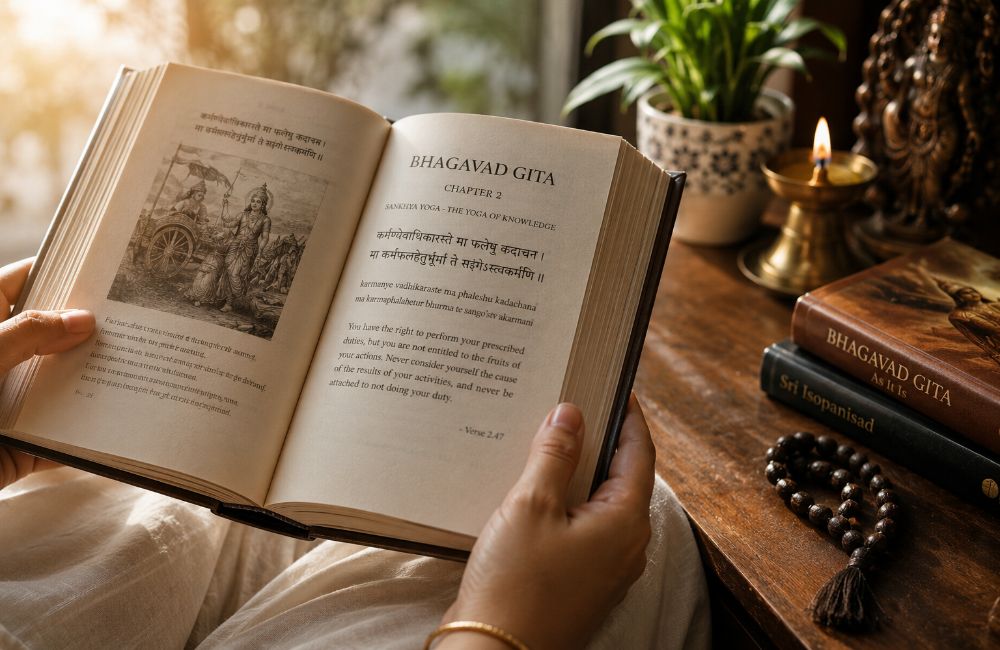
The Bhagavad Gita teaches the practice of Karma Yoga, which means performing one’s duties sincerely without attachment to success or failure. Such selfless action purifies the mind and prepares it for higher spiritual understanding.
Different Paths to Moksha
The Vedic tradition recognizes that people have different temperaments and therefore offers multiple paths to liberation.
1. Jnana Yoga (The Path of Knowledge)
This path emphasizes deep inquiry into the nature of the Self. Through study of the scriptures, contemplation, and guidance from a qualified teacher, the seeker realizes the difference between the eternal Self and the temporary body and mind.
2. Bhakti Yoga (The Path of Devotion)
Bhakti Yoga focuses on cultivating love, surrender, and devotion to the Divine. Through prayer, chanting, worship, and remembrance of God, the heart becomes purified, and the devotee experiences divine grace and inner transformation.
3. Karma Yoga (The Path of Selfless Action)
This path teaches performing every action as an offering to the Divine without selfish attachment. It transforms daily work into spiritual practice and gradually removes ego-centered thinking.
4. Raja Yoga (The Path of Meditation)
Raja Yoga emphasizes discipline of the mind through ethical living, meditation, concentration, and self-control. By calming mental fluctuations, practitioners experience the deeper reality of pure consciousness.
Moksha in Different Schools of Vedanta
Advaita Vedanta
Advaita, taught by the great philosopher Adi Shankaracharya, explains that the individual Self (Atman) and the ultimate reality (Brahman) are not separate. Liberation comes through direct realization of this non-dual truth.
Vishishtadvaita
Vishishtadvaita, established by Ramanujacharya, teaches that the soul is distinct yet inseparably connected with the Supreme Being. Moksha is attained through loving devotion, surrender, and divine grace while maintaining one’s individual identity.
Dvaita
Dvaita, founded by Madhvacharya, maintains that the individual soul and God are eternally distinct. Liberation is achieved through unwavering devotion, righteous living, and the grace of the Supreme Lord.
Although these traditions explain liberation differently, they all agree that Moksha represents freedom from suffering and spiritual fulfillment.
Characteristics of a Liberated Person
The scriptures describe a liberated individual as someone who:
- Remains calm during success and failure.
- Is free from excessive attachment and fear.
- Acts with compassion toward all beings.
- Lives with honesty, humility, and wisdom.
- Sees unity and interconnectedness in life.
- Is not controlled by anger, greed, or hatred.
- Experiences lasting inner peace.
Such a person may continue living in the world while remaining inwardly free.
Can Moksha Be Experienced During Life?
Yes. Many Hindu traditions describe Jivanmukti, meaning liberation while still living. A Jivanmukta continues to perform daily responsibilities but is no longer bound by ego, attachment, or ignorance. Their peace comes from inner realization rather than external circumstances.
This teaching emphasizes that liberation is not only a future goal after death but can also be realized through profound spiritual awakening in this lifetime.
Common Misconceptions About Moksha
Moksha is not escaping life.
It is learning to live with wisdom, freedom, and awareness.
Moksha is not the same as heaven.
Heaven is generally understood as a temporary realm where the results of good karma are experienced. Moksha is permanent liberation from the cycle of birth and death.
Moksha does not require abandoning society.
Many spiritual teachers have demonstrated that one can pursue liberation while fulfilling family, professional, and social responsibilities.
Moksha is not limited to monks.
The Bhagavad Gita teaches that sincere spiritual practice, ethical living, devotion, and selfless action are available to everyone.
Practical Steps Toward Moksha
The journey toward liberation begins with everyday choices:
- Study sacred scriptures regularly.
- Practice meditation and self-reflection.
- Perform duties honestly and selflessly.
- Cultivate compassion and forgiveness.
- Develop detachment from unnecessary desires.
- Control anger, greed, and jealousy.
- Associate with wise teachers and uplifting company.
- Practice gratitude and humility.
- Remember the Divine through prayer or chanting.
- Seek knowledge with sincerity and patience.
Spiritual growth is gradual, and every sincere effort contributes to inner transformation.
Why Moksha Matters Today
Modern life often brings stress, anxiety, competition, and constant distraction. While technological progress has improved many aspects of daily living, lasting peace cannot be achieved through external success alone.
The concept of Moksha reminds us that true fulfillment comes from understanding ourselves, living ethically, and developing inner freedom. It encourages a balanced life in which material progress is complemented by wisdom, compassion, and spiritual growth.
Whether one views Moksha as complete liberation, self-realization, or profound inner peace, its teachings remain deeply relevant. They inspire individuals to move beyond fear, attachment, and ego while cultivating a life of purpose, harmony, and enduring happiness.
Moksha is the highest aspiration in the Vedic tradition-a state of liberation in which ignorance is dissolved, the cycle of birth and death is transcended, and the true nature of the Self is realized. It is not merely a philosophical idea but a practical path of transformation that begins with ethical living, self-discipline, devotion, knowledge, and meditation.
The wisdom of Moksha teaches that lasting happiness is found not in possessing more, but in discovering who we truly are. By integrating these timeless principles into daily life, every individual can progress toward greater freedom, peace, wisdom, and spiritual fulfillment.