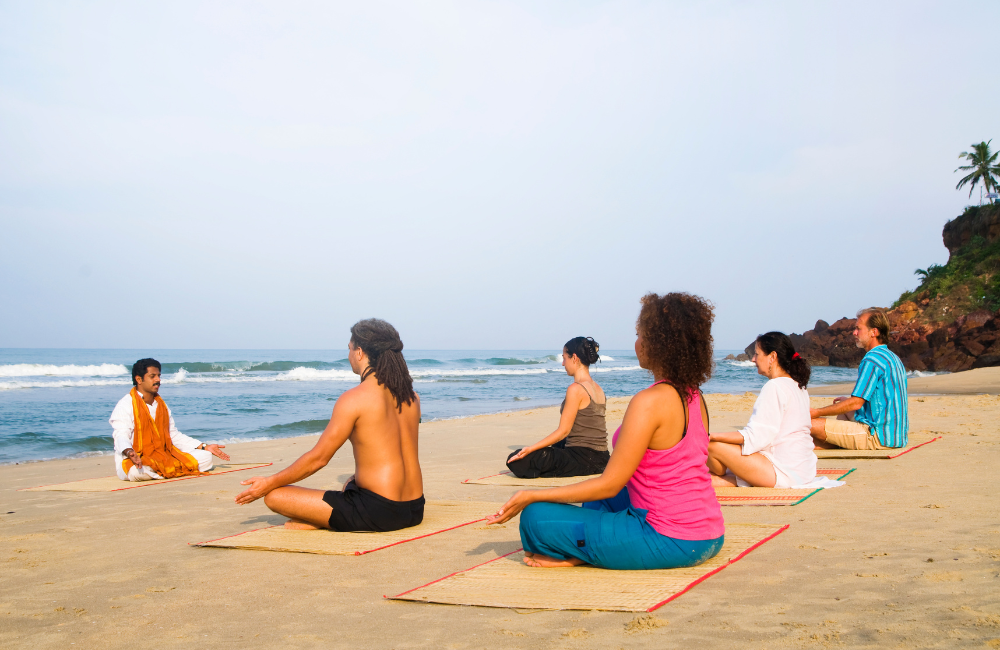
Yoga is practiced by millions of people around the world today. From bustling fitness studios in New York to peaceful retreats in Bali, yoga has become a global phenomenon associated with health, flexibility, and mindfulness. But have you ever wondered who started yoga? Was it created by a single person, or did it evolve over time?
The answer takes us on a fascinating journey through the rich history of ancient India, where yoga first emerged thousands of years ago.
The Question: Who Invented Yoga?
Unlike many modern disciplines or systems that can be traced back to a specific founder, yoga does not have a single inventor. Instead, yoga developed gradually over centuries through the contributions of countless sages, philosophers, and spiritual seekers in ancient India.
Because of its long and complex history, yoga is better understood as a living tradition rather than the creation of one individual.
The Earliest Evidence of Yoga
The roots of yoga may extend back more than 5,000 years. Some historians point to archaeological discoveries from the Indus Valley Civilization, one of the world’s oldest urban cultures. Excavated seals show figures seated in what appear to be meditative postures, suggesting that early forms of yogic practices may have existed during this period.
While scholars continue to debate the exact meaning of these artifacts, they offer intriguing clues about the ancient origins of yoga.
Yoga in the Vedic Age
The first written references to ideas connected with yoga appear in the Vedas, the oldest sacred texts of India. Composed between approximately 1500 and 500 BCE, the Vedas contain hymns, rituals, and spiritual teachings that discuss meditation, self-discipline, and the pursuit of higher consciousness.
Although the physical postures associated with modern yoga were not emphasized at this stage, the foundations of yogic philosophy were already taking shape.
The Upanishads and the Search for Self-Knowledge
As Indian spiritual thought evolved, the Upanishads introduced deeper philosophical concepts that would become central to yoga. These texts explored questions about the nature of the self, the universe, and the path to liberation.
Meditation, breath control, and inner awareness became increasingly important. The goal was not physical fitness but spiritual awakening and self-realization.
Many of the ideas discussed in yoga classes today-such as mindfulness, inner peace, and connection with the self-can be traced back to these ancient teachings.
Patanjali: The Father of Classical Yoga
When discussing the origins of yoga, one name appears more often than any other: Patanjali.
Patanjali was an Indian sage who lived sometime between 200 BCE and 400 CE. He did not invent yoga, but he played a crucial role in organizing and systematizing existing yogic knowledge. His famous work, the Yoga Sutras, became one of the most influential texts in yoga history.
The Yoga Sutras describe the Eight Limbs of Yoga, which include ethical principles, self-discipline, physical posture, breath control, concentration, meditation, and spiritual enlightenment.
Because of his contribution, Patanjali is often referred to as the “Father of Yoga.” However, it is important to remember that yoga existed long before his time.
The Rise of Hatha Yoga
Between the 9th and 15th centuries, yoga underwent another significant transformation with the development of Hatha Yoga. This tradition placed greater emphasis on physical postures, breathing techniques, and the cultivation of vital energy within the body.
Many of the poses practiced in modern yoga classes have their roots in Hatha Yoga traditions. Ancient texts such as the Hatha Yoga Pradipika helped preserve and spread these teachings throughout India.
How Yoga Became a Global Movement
Yoga remained largely within India until the late 19th and early 20th centuries. During this period, influential teachers began introducing yogic philosophy to audiences around the world.
Figures such as Swami Vivekananda, Tirumalai Krishnamacharya, B.K.S. Iyengar, and Pattabhi Jois played major roles in bringing yoga to the international stage. Their teachings inspired new styles of practice that combined traditional wisdom with modern approaches to health and wellness.
Today, yoga is practiced in nearly every country, helping people improve physical fitness, reduce stress, and cultivate mental clarity.
Why Understanding Yoga’s Origins Matters
In today’s world, yoga is often associated with exercise and flexibility. While these benefits are valuable, yoga’s original purpose was much deeper. Ancient yogis viewed yoga as a path toward self-discovery, inner peace, and spiritual growth.
Understanding yoga’s history allows practitioners to appreciate the rich cultural and philosophical traditions that shaped this remarkable practice over thousands of years.
So, who started yoga?
The truth is that no single person can claim credit for creating yoga. It emerged gradually in ancient India through generations of spiritual exploration and philosophical inquiry. While Patanjali helped organize yoga into a structured system, the practice itself is far older than any one teacher or text.
Yoga’s enduring appeal lies in its ability to evolve while remaining connected to its ancient roots. Whether practiced for physical health, mental well-being, or spiritual growth, yoga continues to inspire people around the world-just as it has for thousands of years.
As we roll out our mats today, we are participating in a tradition that began long before recorded history, connecting us to a timeless quest for balance, wisdom, and inner peace.