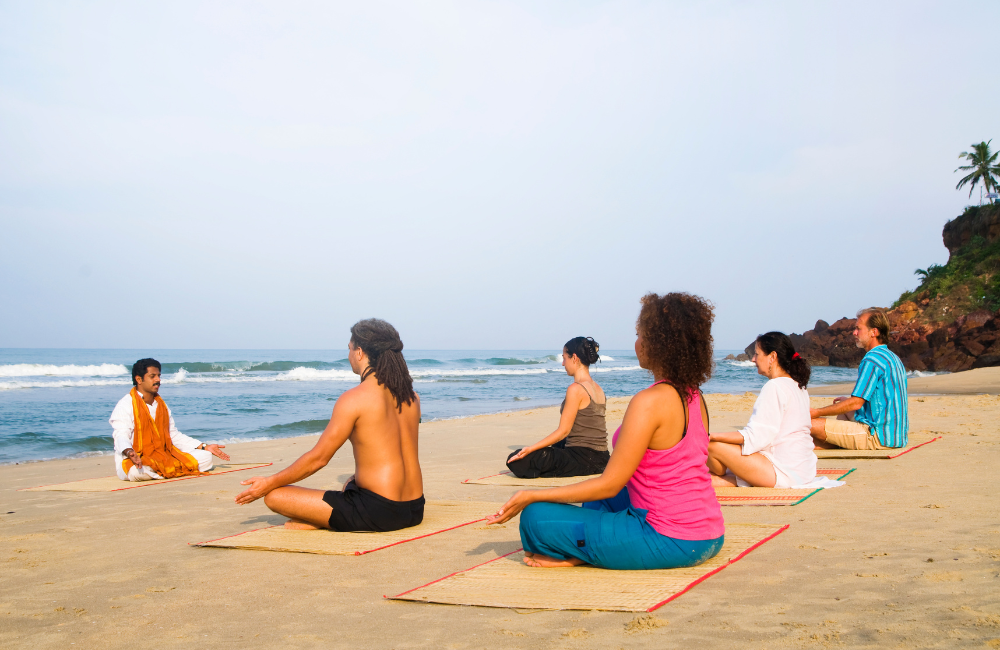
For thousands of years, Yoga has been one of India’s most profound gifts to humanity. What began as a spiritual discipline practiced by sages in ancient forests and Himalayan caves has evolved into a global movement embraced by millions across cultures, religions, and nationalities. Today, Yoga is practiced in homes, schools, parks, fitness centers, and workplaces around the world, culminating each year in the celebration of International Yoga Day on June 21.
But how did an ancient Indian tradition become an international celebration? The answer lies in Yoga’s timeless wisdom and its remarkable ability to address the physical, mental, and spiritual needs of people across generations.
The Ancient Origins of Yoga
The roots of Yoga can be traced back over 5,000 years to the ancient civilization of India. References to yogic practices are found in the Vedas, the oldest sacred texts of India, and later elaborated upon in the Upanishads.
The word “Yoga” comes from the Sanskrit root Yuj, meaning “to unite” or “to join.” Traditionally, Yoga was not merely a system of physical exercises. It was a complete science of life designed to harmonize the body, mind, and soul, ultimately leading an individual toward self-realization and spiritual awakening.
Ancient sages developed various paths of Yoga, including:
- Karma Yoga (the path of selfless action)
- Bhakti Yoga (the path of devotion)
- Jnana Yoga (the path of knowledge)
- Raja Yoga (the path of meditation and mental discipline)
These teachings formed the foundation of India’s spiritual and philosophical traditions.
The Systematization of Yoga
One of the most significant milestones in Yoga’s history was the compilation of the Yoga Sutras by Sage Patanjali around 2,000 years ago.
Patanjali organized Yoga into the famous Eight Limbs of Yoga (Ashtanga Yoga):
- Yama (ethical principles)
- Niyama (personal discipline)
- Asana (physical postures)
- Pranayama (breath control)
- Pratyahara (withdrawal of senses)
- Dharana (concentration)
- Dhyana (meditation)
- Samadhi (spiritual absorption)
This framework transformed Yoga into a structured path for personal transformation and spiritual growth.
Yoga Reaches the Modern World
Although Yoga flourished in India for centuries, its journey to the international stage began during the late 19th and early 20th centuries.
Visionary spiritual leaders introduced Indian philosophy and Yoga to Western audiences. Their teachings sparked curiosity among scholars, seekers, and health enthusiasts who were searching for alternatives to purely materialistic lifestyles.
Throughout the twentieth century, Yoga schools emerged across Europe, North America, Australia, and many other regions. Initially viewed as a spiritual practice, Yoga gradually gained recognition for its physical and mental health benefits.
As scientific research expanded, studies began demonstrating Yoga’s positive effects on:
- Stress reduction
- Flexibility and mobility
- Cardiovascular health
- Mental well-being
- Emotional balance
- Improved concentration
This growing body of evidence accelerated Yoga’s acceptance worldwide.
Why Yoga Resonated Globally
The universal appeal of Yoga lies in its simplicity and adaptability.
Unlike many traditions tied to specific cultures or beliefs, Yoga offers practical tools that can benefit anyone regardless of age, nationality, or religious background.
People around the world discovered that Yoga helps them:
- Manage stress and anxiety
- Improve physical fitness
- Develop mindfulness
- Enhance emotional resilience
- Find inner peace
In an increasingly fast-paced and digitally connected world, Yoga became a pathway to balance and self-care.
The Birth of International Yoga Day
A historic moment arrived in 2014 when India proposed the idea of an International Day of Yoga at the United Nations.
The proposal received unprecedented global support, and June 21 was officially designated as International Yoga Day. The date was chosen because it marks the Summer Solstice, the longest day of the year in the Northern Hemisphere and a day of special significance in yogic traditions.
The first International Yoga Day was celebrated on June 21, 2015.
Since then, millions of people across the globe have participated in Yoga events, community gatherings, workshops, and public demonstrations. Major landmarks, parks, schools, universities, and government institutions regularly organize Yoga sessions to mark the occasion.
More Than Physical Exercise
While modern Yoga is often associated with fitness and flexibility, its true essence extends far beyond physical postures.
Ancient Indian wisdom teaches that Yoga is a journey from the body to the mind and ultimately to the soul.
The practice encourages:
- Self-awareness
- Compassion
- Discipline
- Inner harmony
- Spiritual growth
At its highest level, Yoga seeks to help individuals realize their deeper nature and experience unity with all existence.
Yoga’s Relevance in the Modern Age
The challenges of modern life – stress, anxiety, sedentary lifestyles, and digital overload – have made Yoga more relevant than ever.
As people search for holistic approaches to health and well-being, Yoga continues to provide practical solutions rooted in timeless wisdom.
Its ability to integrate physical health, mental clarity, emotional stability, and spiritual awareness has made it one of the most widely practiced wellness systems in the world.
The story of Yoga is a remarkable journey from the ancient sages of India to a global celebration embraced by millions. What began as a sacred path to self-realization has become a universal practice that transcends borders, cultures, and generations.
International Yoga Day is more than an annual event – it is a recognition of humanity’s shared desire for health, harmony, and inner peace.
As the world continues to embrace Yoga, the ancient wisdom of India remains as relevant today as it was thousands of years ago, guiding people toward a more balanced and meaningful life.